
What Is OBD2? On-Board Diagnostics Explained
In This Guide
What Is OBD2?
OBD2 stands for On-Board Diagnostics, second generation. It is the built-in self-diagnostic system in your car that watches the engine, emissions, and related systems and tells you when something goes wrong. If you have ever asked what is obd2 and why mechanics talk about it so much, the short answer is that it is the common language your car uses to report its own health.
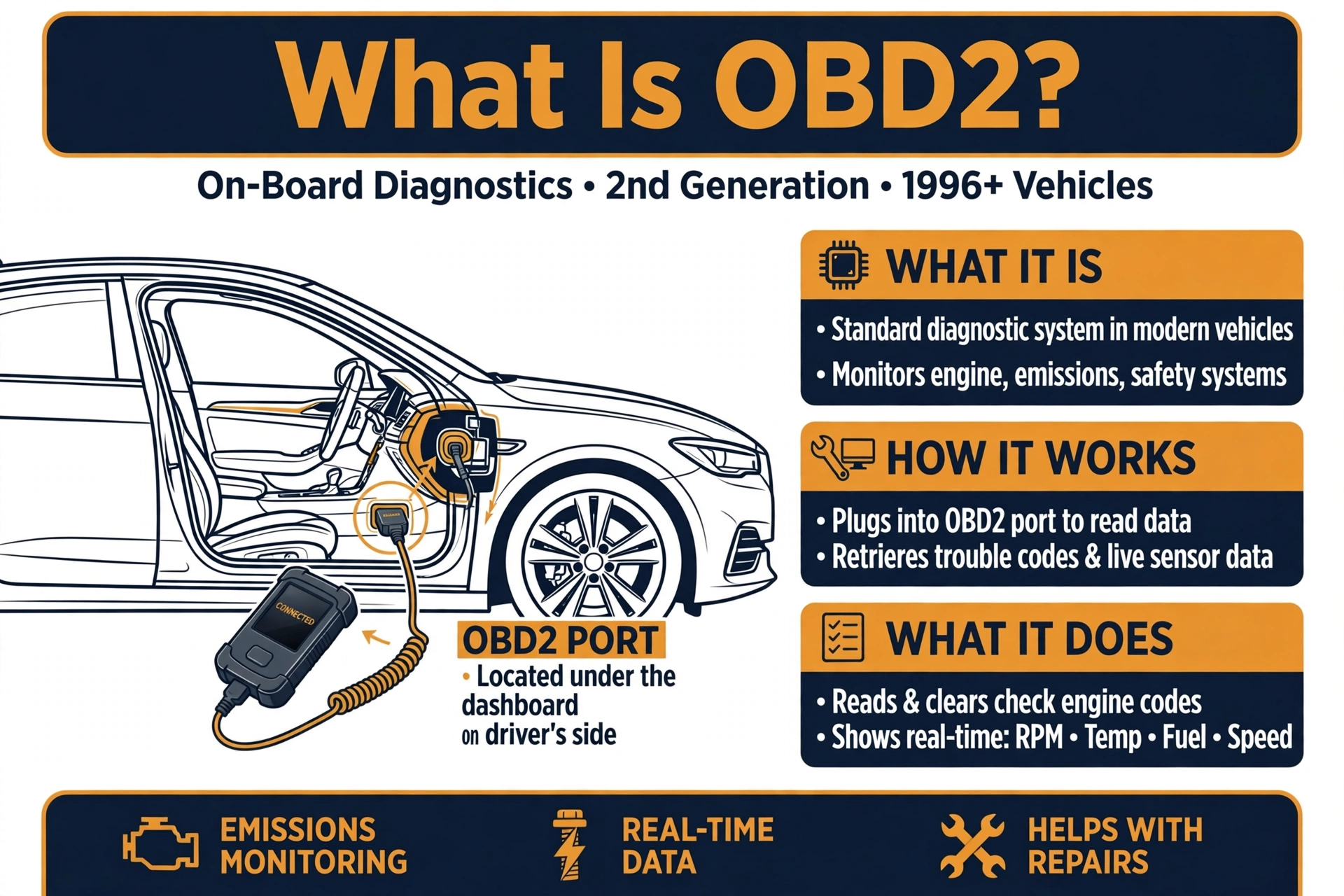
Since model year 1996, every car and light truck sold in the United States has been required to carry OBD2, also written as OBD-II or obd 2. That means the same standard connector, the same code format, and the same basic data are available on virtually every vehicle on the road. When your check engine light comes on, it is the OBD2 system telling you it found a problem and stored a code for you to read.
How the OBD2 System Works
The OBD-II system has four main parts that work together to monitor your vehicle around the clock.
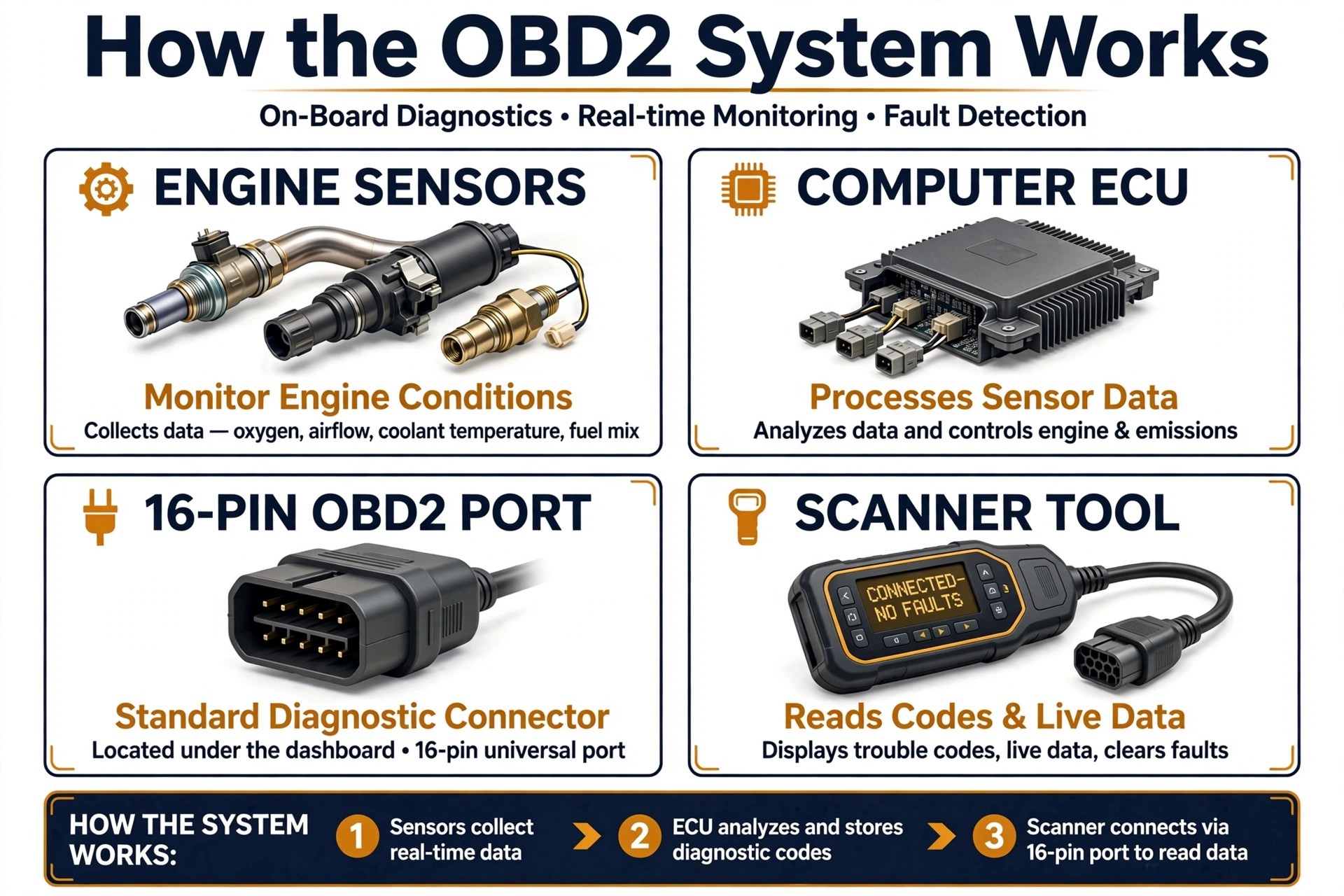
- Sensors: Dozens of sensors measure oxygen levels in the exhaust, engine temperature, engine speed, vehicle speed, fuel delivery, and more. They constantly report what is happening under the hood.
- ECU (engine control unit): Often called the PCM (powertrain control module), this is the car’s computer. It reads the sensor signals, manages the engine, and watches for readings that fall outside normal limits.
- Diagnostic port: A standard 16-pin trapezoid connector located under the dashboard on the driver side. Every OBD2 vehicle has the same port in roughly the same place, so any compliant scanner can plug in.
- Scanner: A code reader or scan tool plugs into the port and communicates with the ECU. It reads stored obd2 codes and displays live data from the sensors.
When a sensor reports a fault, the ECU stores a diagnostic trouble code (DTC) in its memory and turns on the check engine light, also called the malfunction indicator lamp. The code stays stored until it is read and cleared with a scanner.
Reading an OBD2 Code
OBD2 codes, also called diagnostic trouble codes, follow a standard format: one letter followed by four digits. Each character tells you something specific about the fault.
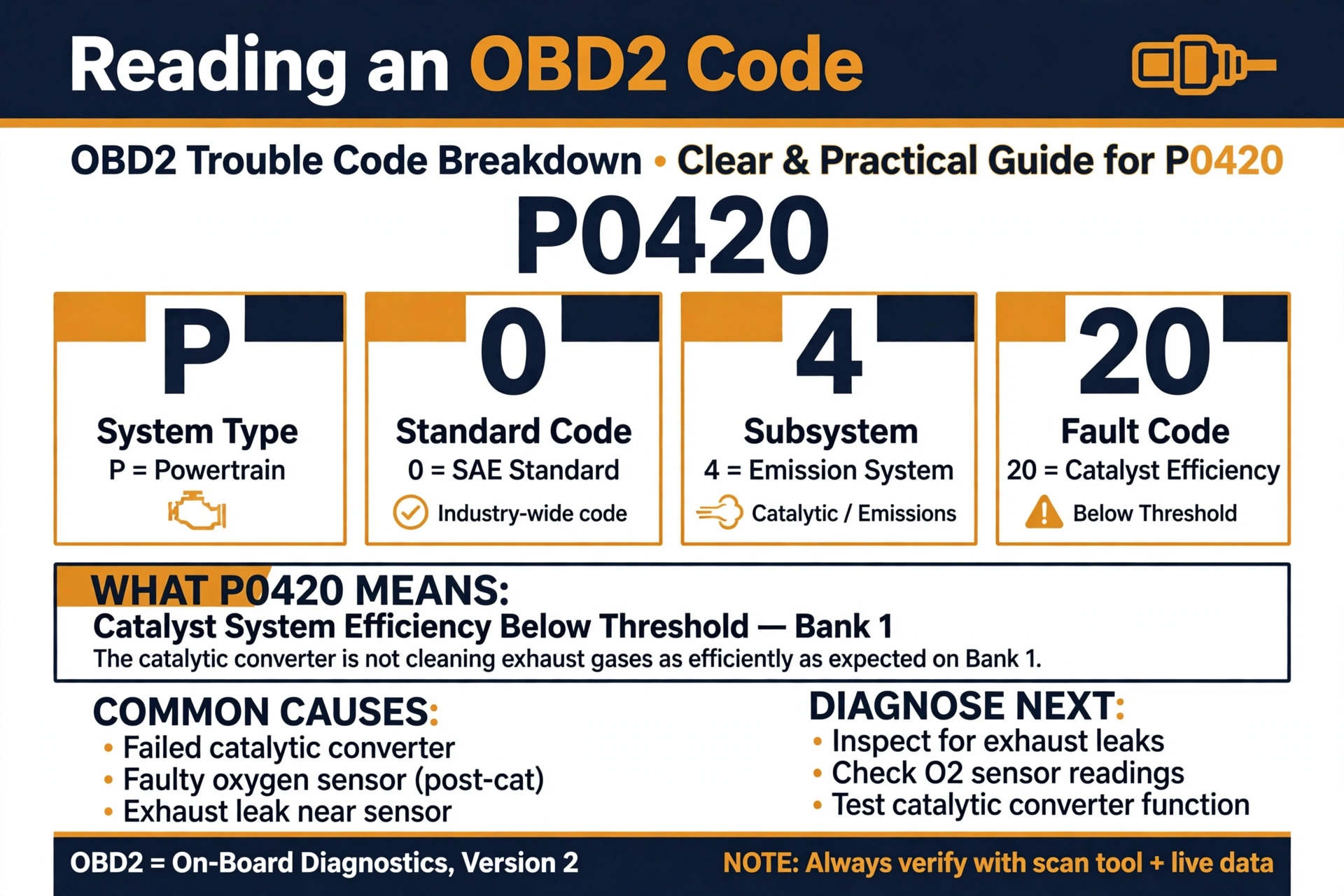
Take P0420 as an example:
- P: Powertrain. The problem is in the engine or transmission system. (B = body, C = chassis, U = network.)
- 0: Generic code. This is a standard SAE code used by all manufacturers. (1 would mean a manufacturer-specific code.)
- 4: Emissions subsystem. This digit points to the vehicle subsystem involved.
- 20: Specific fault index. In this case, catalyst efficiency below threshold, Bank 1.
So P0420 means the ECU has detected that the catalytic converter on bank 1 is not cleaning the exhaust as efficiently as it should. The code points you to the fault, but OBD2 does not by itself fix anything. Diagnosis and repair are still needed to solve the underlying problem.
How to Use OBD2
Using the OBD2 system is simple. You do not need to be a mechanic to read your car’s codes.
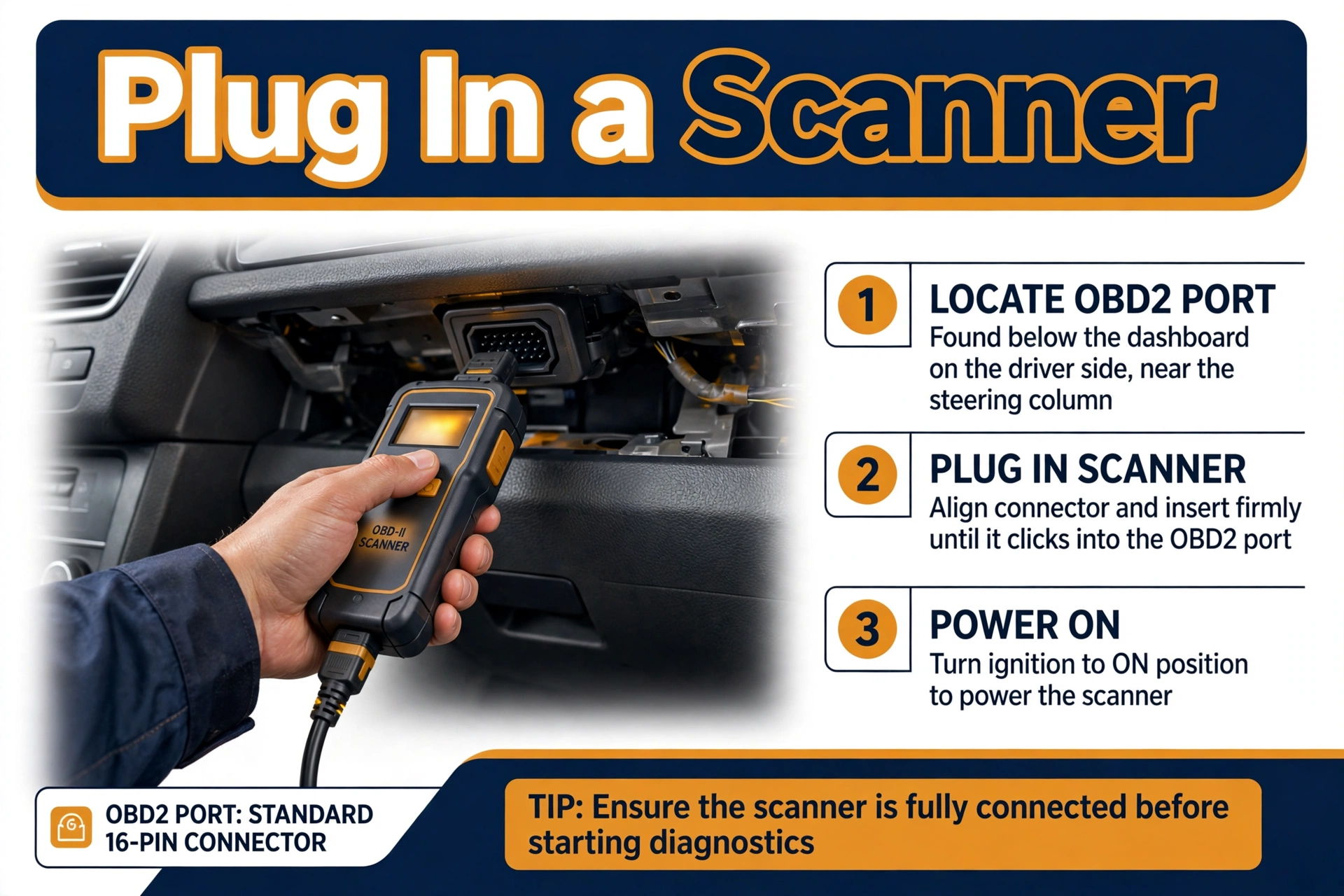
- Locate the port: Find the 16-pin OBD2 connector under the dashboard on the driver side, usually near the steering column or just above the pedals.
- Plug in the scanner: Push the scanner’s connector firmly into the port. It only fits one way.
- Turn the ignition on: Turn the key to the on position, or press the start button without pressing the brake, so the car’s electronics power up. You do not need to start the engine to read codes.
- Read the codes: Follow the scanner’s menu to read stored codes. Write down the full code, such as P0420, then look up what it means and what to check next.
Live Data Explained
Beyond stored codes, the OBD-II system lets you watch live data streaming from the car’s sensors in real time. A scanner can show engine RPM, coolant temperature, vehicle speed, fuel trim values, oxygen sensor voltages, and much more, all updating as the engine runs.
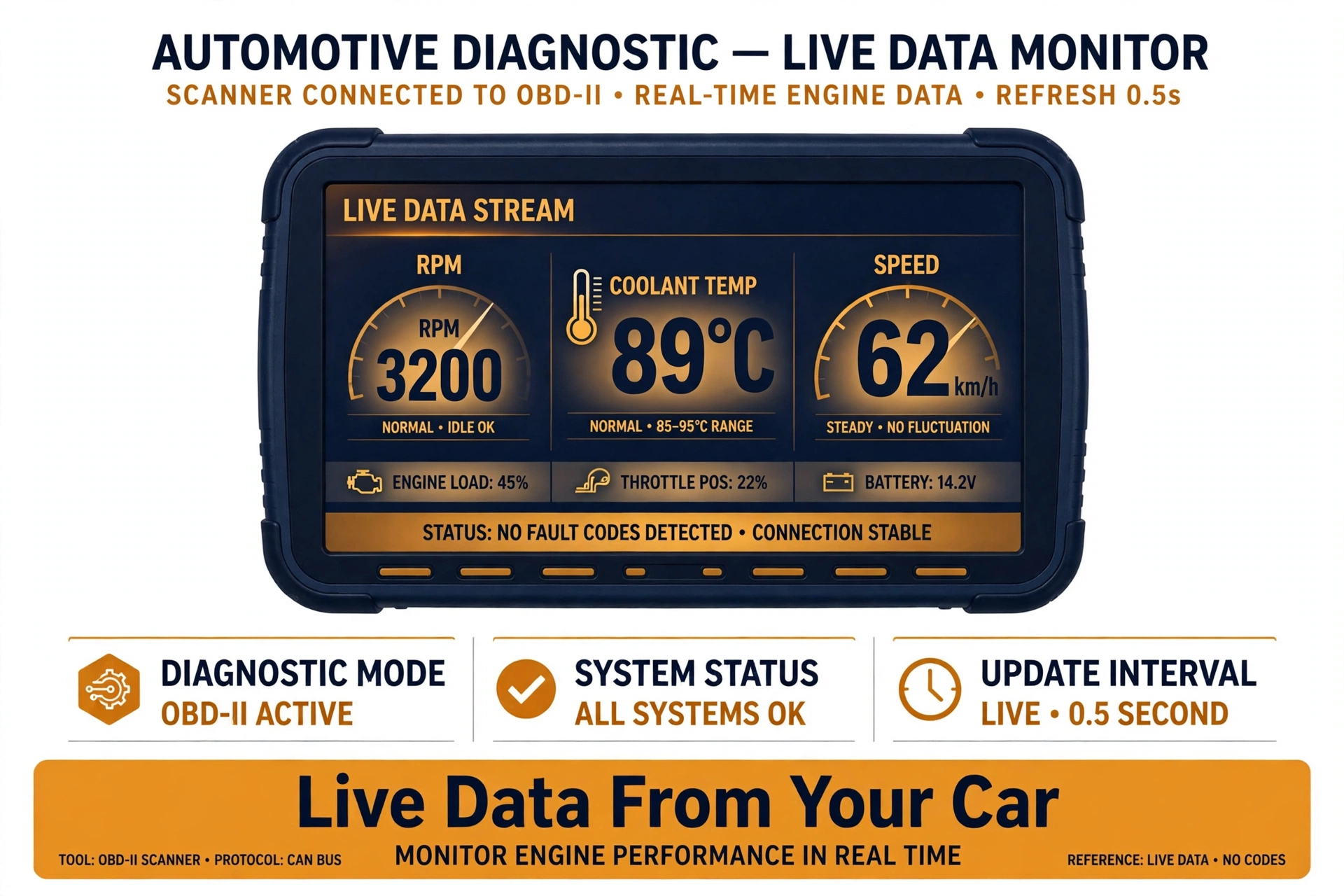
Live data matters because a code only tells you that a fault was detected at some point in the past. Live readings show what the sensors are reporting right now, which helps you confirm a diagnosis, catch an intermittent problem, or verify that a repair actually worked. For example, watching fuel trim values can reveal a vacuum leak that has not yet triggered a code.
Why OBD2 Matters
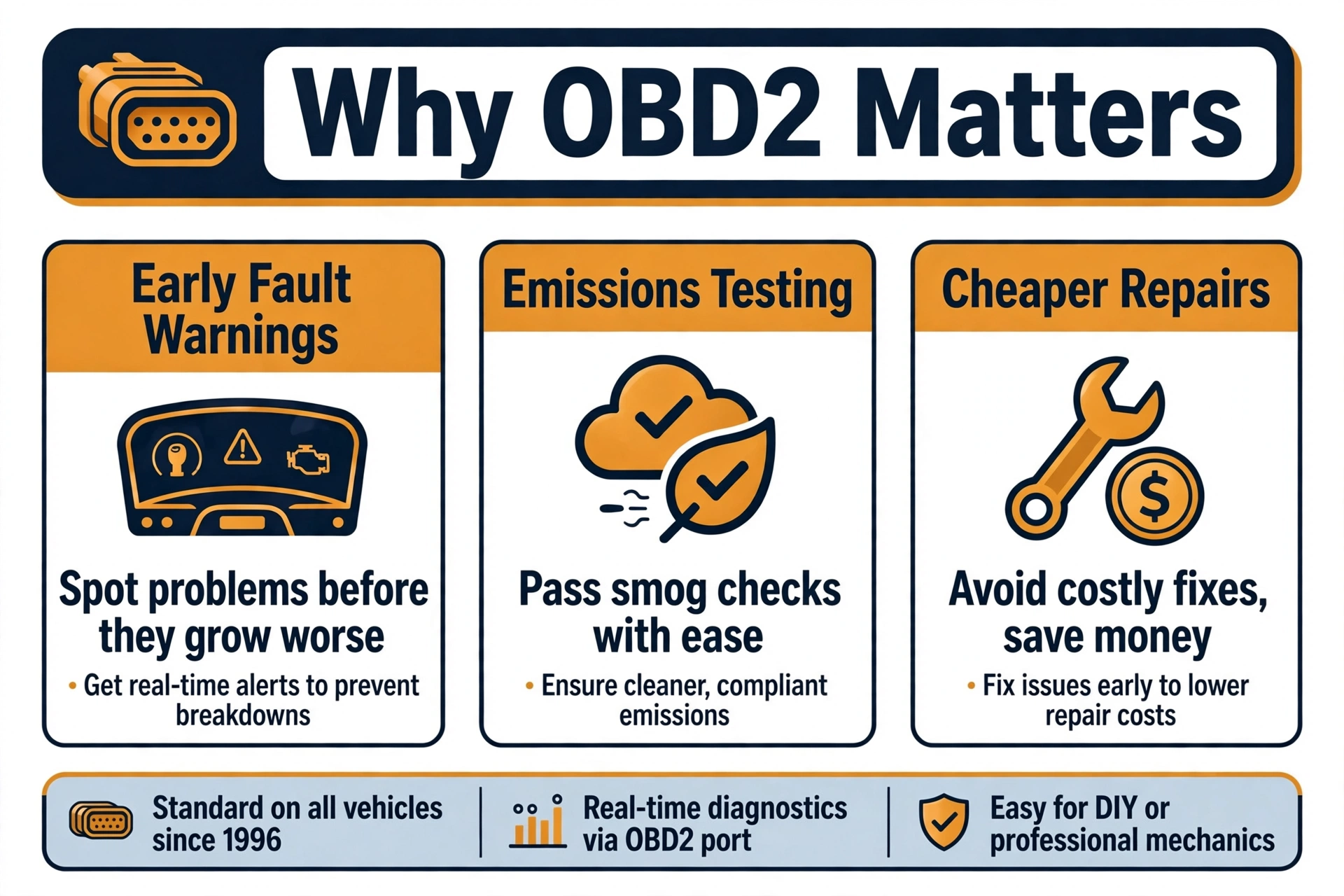
- Early warnings: The system catches problems early, often before you notice any symptoms. A small issue found early is cheaper and easier to fix than a breakdown later.
- Emissions testing: Many states use the OBD2 system for emissions inspections. The inspector plugs into the port and checks that the monitors are ready and no emissions codes are stored.
- Cheaper repairs: Knowing the exact code narrows down the problem before any parts are replaced. That means less guessing, fewer unnecessary parts, and lower repair bills.
OBD2 vs OBD1
Before 1996, cars used OBD1 systems that were manufacturer-specific: each automaker had its own connectors, codes, and readers, so a scanner built for one brand would not work on another. OBD2 replaced that patchwork with a single standard. Since 1996, every car and light truck in the US uses the same 16-pin port and the same code format, which is why one affordable scanner can work on almost any vehicle.
Video Walkthrough: How OBD2 Works
Watch this walkthrough from SparkFun Electronics to see how the OBD2 connector works and how the command structure of the system is laid out.
Video: SparkFun According to Pete #56 – How OBD2 Works (SparkFun Electronics via YouTube)
Frequently Asked Questions
Quick answers to the most common questions about OBD2, OBD-II, and obd2 codes.
What does OBD2 stand for?
OBD2 stands for On-Board Diagnostics, second generation. It is the standardized self-diagnostic system built into cars and light trucks that monitors the engine, emissions, and related systems, stores diagnostic trouble codes when faults are found, and turns on the check engine light.
Is my car OBD2 compliant?
If your car or light truck was sold in the United States for model year 1996 or later, it is OBD2 compliant by law. Look under the dashboard on the driver side for the standard 16-pin trapezoid connector. If the port is there, your vehicle uses the OBD-II standard.
Where is the OBD2 port located?
The standard 16-pin trapezoid OBD2 port sits under the dashboard on the driver side, usually near the steering column or just above the pedals. On most vehicles it is within reach of the driver seat and uncovered, though some models hide it behind a small trim panel.
Can OBD2 tell me exactly what is wrong with my car?
OBD2 points to the fault but does not by itself fix anything. A code such as P0420 tells you the catalytic converter efficiency is below threshold on bank 1, but you still need diagnosis to find the root cause, which could be the converter itself, an oxygen sensor, an exhaust leak, or something else. The code is the starting point, not the final answer.
Will an OBD2 scanner work on any car?
Any scanner built for the OBD-II standard works on any 1996 or newer car or light truck sold in the US, because they all share the same port and code format. Basic code readers handle reading and clearing obd2 codes on any compliant vehicle, while advanced scan tools may add manufacturer-specific features for certain brands.
Does clearing a code fix the problem?
No. Clearing a code erases it from the ECU memory and turns off the check engine light, but it does nothing to repair the underlying fault. If the problem is still present, the code will return, usually within a few drive cycles. Always diagnose and repair the cause before clearing codes.
What is the difference between OBD2 and OBD-II?
There is no difference. OBD2, OBD-II, and obd 2 are simply different ways of writing the same thing: On-Board Diagnostics, second generation. All three refer to the standardized diagnostic system mandatory on US cars and light trucks since model year 1996.
Conclusion
OBD2 is the standard system that lets your car monitor itself and report problems in a language any scanner can understand. It has been mandatory on US cars and light trucks since 1996, covering the engine, emissions, and related systems through sensors, the ECU, a standard port, and a scanner. The next time your check engine light comes on, you will know exactly what is happening: the system found a fault, stored a code, and is waiting for you to read it.
About the author: Written by the OBD2 Code Hub editorial team. We create clear, practical guides that help drivers understand their vehicle’s diagnostic system and make confident repair decisions.